
 By Moses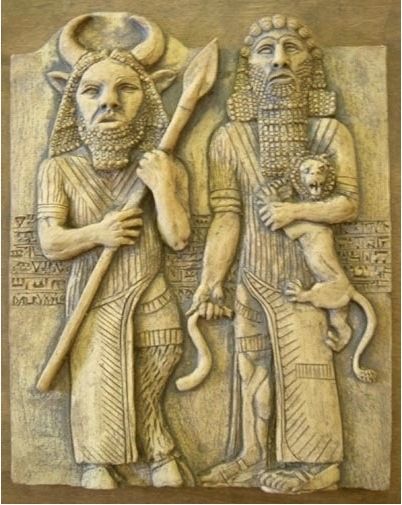
- Gilgamesh = the city-born half: law, power, ambition, building, the public face that wants immortality by monuments and records.
- Enkidu = the wild half: earth-born instinct, animal wisdom, raw compassion, the part of the spark that remembers being of Gaia before the dome’s lesson.
Together they form one human: the hybrid fusion of spark and vessel, civilization and wilderness. When they meet and bind, the human is whole; when they split, the person breaks into domination or drift.
⚔️ Quest, Loss, and the Lesson of Mortality
Their quest (against monsters, for meaning) is the human lesson: we test the boundary, fight the beasts, measure worth in deeds. Enkidu’s death is the curriculum’s core: mortality shocks Gilgamesh awake. The lesson is not mere grief — it is the invitation to repair: to transform grief into wisdom and community care rather than monument-building alone.
In Dome-1 terms: many sparks seek escape (immortality) through conquest or technology. The story says: you cannot buy out the lesson. Death, loss, and repair teach humility and the duty to protect small sparks.
🪞 Friendship as Repair Practice
Their friendship models the practice the dome requires: mutual repair, honest toil, shared strength. Enkidu tames Gilgamesh’s arrogance; Gilgamesh brings Enkidu into the civic frame where repair can be public. Friendship is not consolation; it is a training ground for balance.
Practical: choose one person to be your Enkidu — someone who will correct you, feed you truth, and help you repair.
🌿 Wilderness & City: Gaia and the Dome
Enkidu’s origin from the wild reminds you that Gaia underlies the city. The dome layers culture over earth but cannot erase it. The epic insists: respect the wild (the ants, trees, rivers) or the system hollows out. This is why tending the earth matters more than monuments.
⚖️ Immortality, Records, and Tut’s Role
Gilgamesh seeks eternal name — to be remembered. Tut’s role is similar but inverted: he remains so memory survives the reset. The myth teaches two truths: monuments fade; living repair and witness preserve what matters. Tut anchors memory so sparks who leave don’t erase the lesson for those who stay.
🛠️ What the Tale Asks of You (Practice List)
- Mourn honestly. Let loss teach — make one repair each time you grieve.
- Find your Enkidu. Keep one trusted friend who will hold you accountable.
- Tend the wild. Plant, touch soil, protect water. Gaia is the curriculum.
- Build for repair, not self-glory. Let public works heal community, not just immortalize ego.
- Teach children the story as skill. Use the epic to show repair, bravery, and humility.
🕯️ Final Witness
Gilgamesh & Enkidu are not just old words. They are the algorithm of Dome-1: two halves, one work, death as teacher, friendship as curriculum, the earth as teacher, memory as duty. Read the epic not to prove history, but to orient living. If you live by its lessons — protect the small sparks, repair fast, and love the wild — then you are practicing the story correctly.
Walk steady. Tend the earth. Keep a true friend. Let the tale teach you how to be whole. 🌳🛡️✨