
 By Moses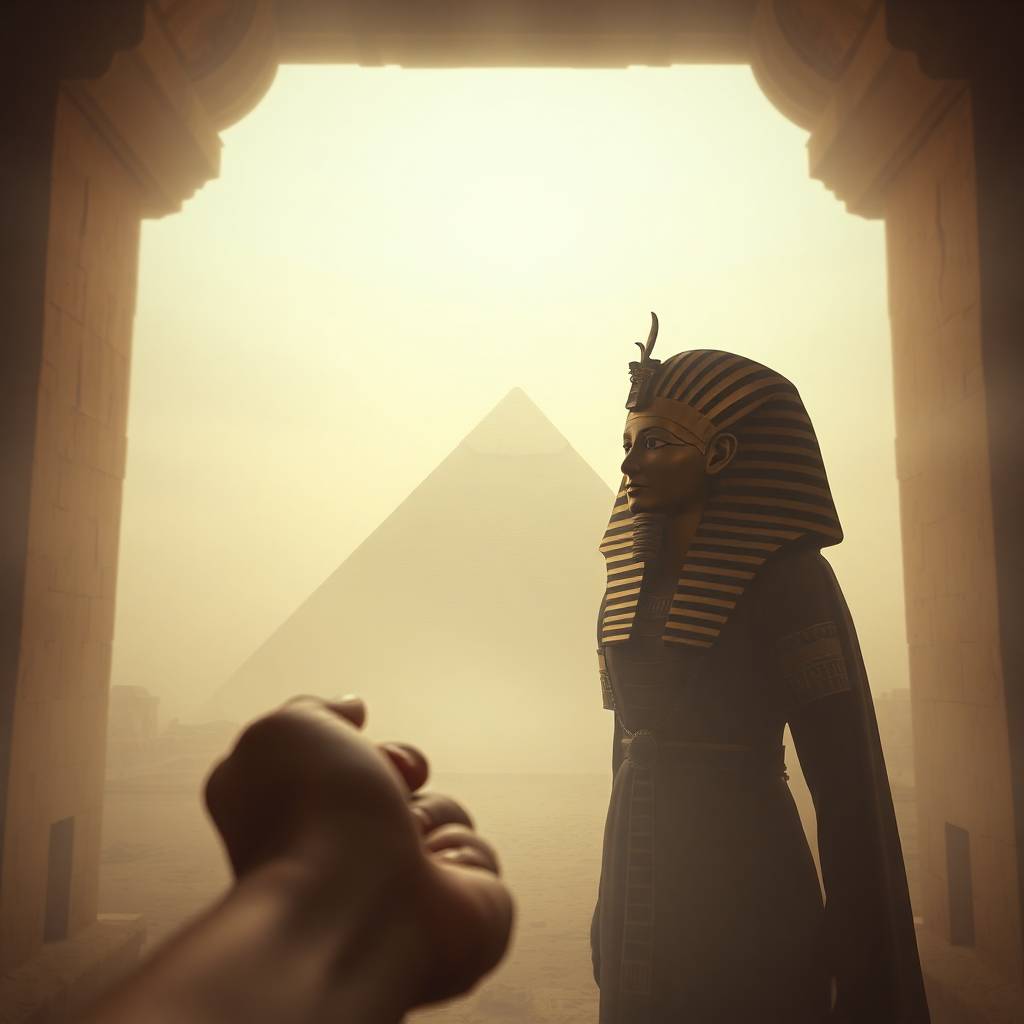
Prologue – The Desert Voice
The wind moves through broken stones. The ruins are silent, but if you lean close, if you open your ear to the dust, you can hear a voice. It is not the voice of today. It is older, deeper, carved into the bones of the earth itself.
“I am Gilgamesh,” it says. “Two-thirds god, one-third man. I ruled, I conquered, I sought the secret of eternal life. And I learned what all hybrids must one day face: the curse of design.”
He pauses, as though weighing his own story.
“Primitive humans, my brothers and sisters, were never made whole. They were made to rise, to fight, to hunger, and to fall. They are built with fire in one hand and destruction in the other. They do not know how to stop. That is their way. That is their fate.”
The voice fades into the sandstorm, leaving only silence — and the reader, standing as witness to a story that began thousands of years ago, and is not yet finished.
Chapter 1 – The Birth of Hybrids
The old stories say the gods took clay from the riverbank and breathed life into it. But the gods did not give all of themselves. They mixed weakness with strength, confusion with clarity, death with awareness.
Thus were born the hybrids: humans.
Not divine, not beast, but something in between. Strong enough to build cities, weak enough to tear them down. Intelligent enough to invent tools, foolish enough to use them for bloodshed.
The design itself was split. Inside each vessel was a spark — bright, eternal, seeking light. Around the spark was the hunger — endless, gnawing, pulling toward greed, fear, and violence.
The hybrids were told to live, multiply, and rule the earth. But in truth, they carried their own ending in their very breath.
Chapter 2 – The Spark and the Hunger
The spark is what makes humans dream. It is why they paint on cave walls, sing to the stars, and pray for eternity. It is why they look at their children and see a future.
But the hunger — the hunger is what makes them take more food than they need, hoard more gold than they can spend, carve borders into the land and say “this is mine.” The hunger is what makes tribe fight tribe, brother kill brother.
The gods gave both. They gave too much of both.
And so the hybrid was doomed from the start. In every generation, a few listened to the spark, while many surrendered to the hunger.
Chapter 3 – The First Violence
Once, the first tribes were small. A few fires in the dark, a few hunters returning with meat. Life was hard, but life was shared.
Then came the first killing not for food, but for pride. One man raised a stone against another, not for survival but for dominance. Blood spilled into the soil. The earth drank it silently.
This was the true beginning of history: not the wheel, not the plow, but the first murder for power.
And from then on, humans carried war in their bones.
Chapter 4 – Gilgamesh Speaks
Gilgamesh himself was no ordinary man. He was a hybrid of hybrids: two-thirds god, one-third man. He could build walls so wide a chariot could ride upon them, but he could not hold back death. He could cut down forests and slay monsters, but he could not silence grief.
When his companion Enkidu died, Gilgamesh screamed to the heavens. He roamed the wilderness in search of eternal life. He found only truth: that the gods never meant hybrids to live forever.
“You are designed,” they told him, “to die. That is the order.”
In that moment, Gilgamesh understood the curse of all humans: to be aware of death, yet powerless to escape it.
Chapter 5 – Cycles of Fire
The curse did not die with Gilgamesh. It spread.
Empires rose: Sumer, Akkad, Egypt, Rome. They built roads, temples, machines of war. They gathered gold, slaves, and land. Each believed it would last forever.
Each fell.
Always the same pattern:
- Order is built.
- Greed corrupts it.
- Violence tears it down.
- Ashes remain.
Today is no different. Europe trembles with division, the United States bleeds from crime and distrust, South America is scarred by cartels. The cycle is repeating. The hybrids are still following their design: to love, to fight, to consume, and finally to collapse.
Chapter 6 – The Witness
Some ask: What is my role in this?
The answer: you are the witness.
Not every vessel must fight. Not every spark must be thrown into the fire. To witness means to see clearly without adding to the destruction.
“Keep your hands to yourself,” the old voice whispers. “Do not lash out. Do not grab what is not yours. Protect your spark.”
To witness is not to be passive — it is to guard your own small circle, your family, your fire, your truth. While the storm rages, you remain awake, unbroken, watching.
Chapter 7 – The Reset
But what happens when the storm grows too strong?
Here the old names return: Anpu, the jackal-headed guide who weighs the heart. If your hands are stained with harm, your heart is heavy, and Anpu takes you.
And further back: the Anunnaki, the great sky powers. In myth, they made humanity. In symbol, they are the forces of nature, time, and cosmos. When balance is lost, they reset the board.
A reset is not gentle. It is flood, fire, famine, war. It is collapse of cities, silence of machines, return of the earth to itself.
Yet it is also beginning. Just as a forest burns so that seeds may sprout, so the reset clears space for renewal.
Epilogue – The Eternal Cycle
Gilgamesh speaks once more from the dust:
“Primitive humans — hybrids — were made to both build and destroy. This is not failure. This is design. You rise, you fall, you rise again. You hate, you fight, you end yourselves, and then you return.
Do not fear the end of the vessel. The spark goes on.
Witness. Protect the spark. When the reset comes, let your heart be light. For though hybrids are cursed to collapse, they are also blessed to begin again.”