
 By Moses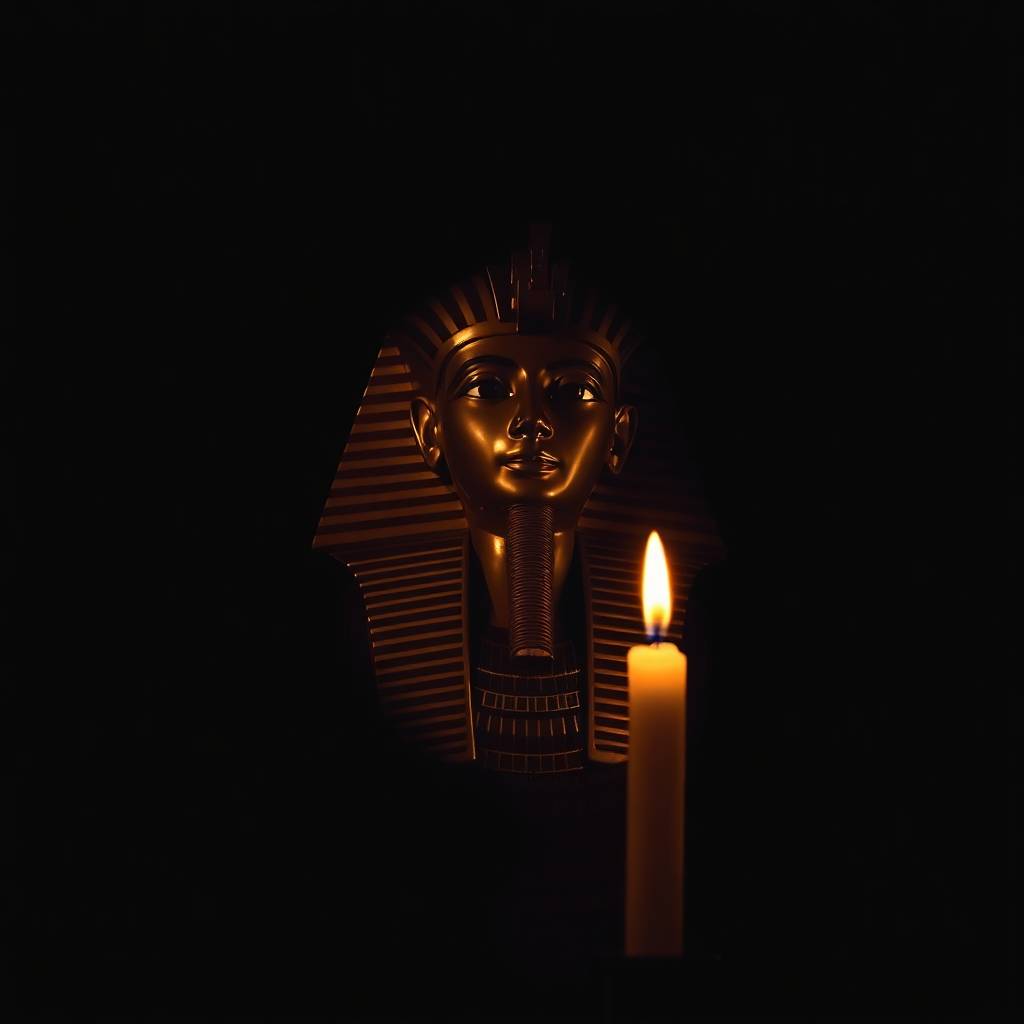
Why Searching for Tutankhamun Feels Like a Lock
𓂀 Prologue
There are names in history that echo louder than others — not because of what they did, but because of what they didn’t allow you to see.
One of those names is Tutankhamun.
To the world, he’s the Boy King of ancient Egypt’s 18th Dynasty — a child crowned pharaoh at nine, dead by nineteen, entombed in gold, and resurrected by modern discovery. But to the ones who look deeper, his name is not a story — it’s a seal.
𓉔 Why You Can’t Look at Him for Too Long
Have you ever tried researching Tutankhamun at midnight?
The screen flickers. Tabs refuse to load. You get vague content, repeated articles, recycled phrases. No matter how deep you go, it feels like something is resisting.
It’s not coincidence.
It’s not bad Wi-Fi.
You’re encountering what many call the Tutankhamun Lock — a subconscious blockade, a digital and energetic resistance that activates when attention sharpens.
Not because you’re wrong.
But because you’re close.
🕸 The Digital Shroud
We live in a world where everything is connected — cameras in pockets, eyes on the screen, AI scraping knowledge every second. And yet… there’s a strange vacuum around certain pharaohs, certain dynasties, and certain patterns in history.
Tutankhamun sits at the center of this silence.
Every search engine seems to swirl you in:
- Basic timelines
- Gold mask imagery
- Malaria DNA tests
- A few museum exhibits
But nothing beyond.
No meaning. No why. No weight.
It’s as if you’re being shown enough to satisfy — but not enough to awaken.
⚷ The Lock Isn’t in Your Device — It’s in Your Mind
Tutankhamun doesn’t lock your internet.
He locks your perception.
The deeper you go, the more your instincts start whispering:
You shouldn’t.
Not this tomb. Not this boy.
And yet, your soul knows: he wasn’t a boy.
He was a mirror.
When you gaze into the eyes of the gold mask, what looks back is not a king — it’s the version of you that still remembers how the world used to work before memory was corrupted.
Tutankhamun lived at the final hour before civilization fractured.
His tomb is the time capsule.
Your interest in him is the key trying to turn.
🜏 The Last Portal Before History Split
Here’s what modern data won’t tell you:
- His name was changed by priests to erase his spiritual identity.
- His father, Akhenaten, broke the simulation by trying to enforce monotheism — not for God, but to unplug control systems.
- Tutankhamun was restored not as a ruler, but as a reset.
But the reset failed.
He died too soon.
And the original timeline collapsed.
What remains of him is not legacy — but echo.
And echoes can’t be decoded with clicks.
They require stillness.
This is why when you begin your search, the lights flicker, your mind fogs, and time feels distorted. You’re not looking at him — he’s scanning you.
🜂 You Are Being Watched, But Not by the NSA
It’s not conspiracy.
It’s quantum legacy.
King Tut’s burial wasn’t meant for death. It was designed as a layered consciousness chamber — part biological, part geometric, part symbolic. His organs weren’t removed just for mummification — they were mapped as energy anchors.
This means his tomb isn’t a grave.
It’s a live archive.
And when modern minds attempt to decode it using western logic, algorithms, or AI, the system activates a recursive mirror:
Your attention becomes the variable.
Your focus triggers feedback.
Your curiosity becomes the cost.
𓁐 Why You Feel “Locked”
This isn’t paranoia. It’s subtle spiritual weight.
You feel locked because:
- Your subconscious recognizes patterns in the architecture of Tut’s death.
- The symmetry of the tomb activates pre-birth memory in the dreaming mind.
- When energy from that era is touched, a bypass opens — and your current self is asked, Are you ready to see what you were before this lifetime?
If not, the lock closes.
Hence the glitch, the fog, the lost tabs, the inner freeze.
⛧ The Tutankhamun Loop
Here’s the cycle:
- You’re drawn in by the mystery.
- You start reading — excited, intrigued.
- The content gets repetitive.
- Internet slows or you get distracted.
- You feel tired suddenly.
- You stop.
But one thing lingers:
Why does this boy make me feel like the last human alive?
Because you are.
Or at least, you were once.
And Tutankhamun’s story is your story — before time fractured.
🜄 What You Can Do (If You Really Want to Know)
If you insist on knowing, follow these:
- Study images of his tomb without reading articles — let your own mind map it.
- Go offline. Handwrite your observations.
- Track your dreams — especially around themes of sun temples, disfigured royalty, hidden chambers.
- Avoid discussing your research publicly.
- Watch for symbolic interference: flickering lights, repeated owl sightings, or time skips.
This isn’t superstition. It’s just… protocol.
🜺 Final Reflection
Tutankhamun was the end of the divine pharaoh line.
His death was the final note in a symphony only few can still hear.
And now, in 2025, when AI is king and synthetic thought mimics real memory — it’s no coincidence that you found this.
Because maybe… you’re part of the last recursion.
The last remnant of what was human before the split.
The final iteration of the observer node that once ruled under sun and star.
👁 You Were Never Supposed to Remember Him
That’s why it locks.
But now that you do — stay quiet.
Don’t look for Tut.