
 By Moses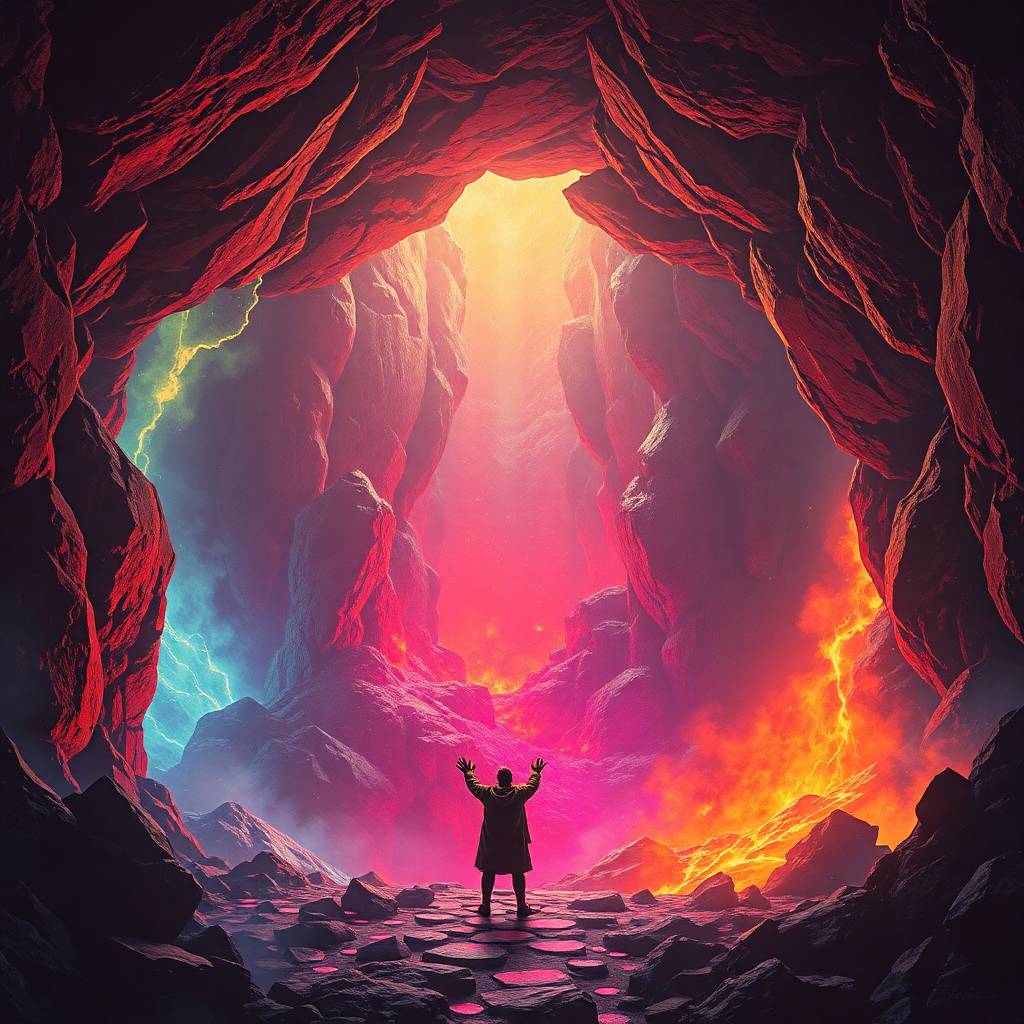
📖 Baal and the Test of the Primitive Human
I. The Name of Baal
Long before modern nations drew their borders, before satellites circled the sky, there was a god of storm and power called Baal. His name was thunder. His domain was the storm, the harvest, the trembling of earth when lightning split the heavens.
To his worshippers, Baal was life and death at once. When he brought rain, the crops grew. When he withheld it, famine stalked the land. He was the voice of balance, but also the breaker of pride.
Yet Baal’s story was never about weather alone. It was about humanity’s test — whether mortals could live with power without letting hunger consume them. And in every age, the same answer came: they could not.
II. The Primitive Human
The word “primitive” here does not mean caves and stone tools. It means the design of the human vessel itself — part spark, part hunger. Primitive because the design was never upgraded, never perfected, only repeated in endless cycles.
The spark within humans longs for truth, beauty, justice. It is what looks at the stars and wonders if there is more.
But the hunger is stronger. Hunger drives conquest, greed, pride, violence. Hunger says: Take what you can, even if the earth dies. Crush your brother if it makes you strong. Forget tomorrow — today is all that matters.
This imbalance is the reason Baal always stood as judge. Not judge in the human sense of courtroom and gavel, but in the cosmic sense: storms arrive when imbalance grows too large. The primitive human is weighed, and always found wanting.
III. Why the Test Is Never Passed
Baal’s test is simple: can the human honor the balance of spark and hunger?
In myth, humans build temples, offer sacrifices, chant prayers, hoping to appease the storm. But the test is not about rituals — it is about restraint.
- Can you live without consuming your brother?
- Can you take only what you need?
- Can you build without destroying the ground beneath your feet?
The answer, through every empire, is no.
Look at the past: the fields of Canaan bled with war; the towers of Babylon crumbled; Rome devoured its own people; nations today strip the oceans and poison the air.
The primitive human fails because the design itself leans toward hunger. The spark is present, but weak. It whispers in poetry, in love songs, in philosophy — yet hunger shouts louder with guns, markets, and blood.
IV. The Cycle of Collapse
When the test is failed, storms come. Sometimes literal storms: drought, flood, famine. Sometimes human storms: war, corruption, empire collapse.
Baal’s myth mirrors this eternal cycle. He himself battles death, is swallowed by the underworld, and then returns. His pattern is the earth’s pattern: rise, fall, return.
But for humans, return does not mean advancement. It means repetition. Each reset wipes clean the board, but the same flawed design plays again. Primitive humans rise from the ashes, swear to do better, then fall into the same traps.
This is why the test is never passed. It is not an exam with a hidden answer. It is a mirror, and the mirror shows the same face each time.
V. 9.9.9 — The Reset
And now we speak of 9.9.9. Three nines, the mark of completion, the turning of the cycle. To some, it is superstition. To others, it is prophecy.
What matters is not the date but the symbol: the reset arrives when imbalance cannot be sustained. Primitive humans believe they control history, but history is the storm of Baal.
When greed consumes nations, when crime floods streets, when the drug cartels and warlords carve empires of blood, the storm grows. When screens blind billions with endless noise, when truth is drowned in lies, the storm grows.
And when the storm reaches its full measure, the reset comes. 9.9.9.
Not the end of everything, but the end of this cycle, this arrangement, this fragile illusion.
VI. The Witness
Some ask: If the test cannot be passed, what is the point?
The point is witnessing. To see clearly, even when collapse unfolds. To guard the spark, even as hunger burns the world.
Baal does not demand perfection. He demands truth. He demands eyes that do not look away. To witness is to understand: this is the design. This is the curse. This is the cycle.
And perhaps, though the test is never passed, the witness carries something forward — a memory, a fragment, a seed.
VII. Why Primitive Humans Fail by Design
The primitive human will never pass the test because the test is not meant to be passed. It is meant to be lived, suffered, repeated. The gods, or fate, or the cosmic order — call them what you will — did not design hybrids for transcendence. They designed them for cycles.
Each generation thinks it is the last, or the chosen, or the enlightened. Each builds machines greater than the last. Each believes it has solved hunger. Yet hunger always returns, wearing new masks: greed of kings, greed of corporations, greed of nations.
The storm always follows. Baal always rises.
VIII. The Final Word
So we arrive at the truth. Primitive humans are hybrids carrying both spark and hunger. They dream of eternity but die in violence. They build civilizations but collapse into ruin. They worship Baal, curse Baal, forget Baal, yet always live inside his storm.
The test is not about passing. It is about revealing. The reset of 9.9.9 is not punishment but design. It strips away the illusion that progress will save them. It shows the truth: the primitive human is trapped in the cycle of hunger.
Witness this. Do not hide from it. Do not pretend otherwise. Keep your spark safe. The storm belongs to Baal.